

Municipal water treatment requires reliable, efficient, and safe processes to ensure communities’ access to fresh drinking water. Ground water, surface water, and other sources have different characteristics which make most of municipal water treatment systems unique to the area they serve.
IDE partners with municipalities around the world in smart, efficient, sustainable, and cost-effective ways. IDE’s integrated solutions and unique expertise help manage and overcome important challenges in the dynamic municipal sector.



THE GROWING NEED FOR WATER REUSE
Municipalities wish to optimize their overall water use by reusing their wastewater prior to discharging it back to the environment. By doing so, water reuse in either IPR or DPR approaches can be an alternative water source for municipalities to enhance water security.
Implementation of DPR and IPR approaches.
At IDE, we partner with municipalities on the development, construction, operation, and financing of innovative, economical, and sustainable municipal water treatment solutions.


AT IDE, WE PARTNER WITH MUNICIPAL CUSTOMERS TO:
- Effectively treat wastewater and redirect it for reuse (DPR and IPR)
- Address needs related to aging infrastructure expansion and replacement
- Adhere to policies and regulatory requirements
- Create a sustainable and high-quality water supply
- Meet the increased water demands of a growing population


CHOOSE YOUR MODEL
IDE collaborates with municipalities using various business models to establish an optimal framework for cooperation tailored to the customer’s requirements.
Potential models encompass Public-Private Partnerships (PPP/P3), including Build Operate Transfer (BOT) and Build Own Operate (BOO), as well as turnkey project execution projects such as Design-Build (DB), Engineering-Procurement-Services/Support (EPS), and Operation and Maintenance (O&M).
Within the P3 frameworks, IDE assumes responsibility for designing, building and financing the project. Subsequently, the company operates the facility under a long-term concession, ensuring optimal risk allocation and long-term sustainability.
Related Projects


-
Cherokee Wastewater Treatment Plant (USA)
PFRO, Wastewater Treatment, Municipal
Read more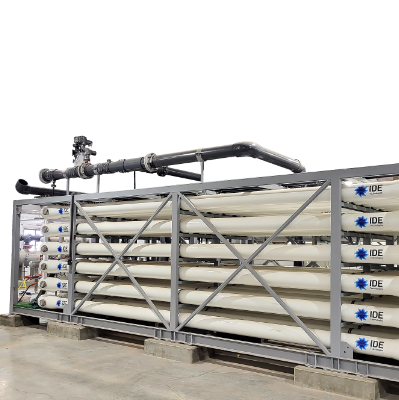
-
Koyambedu Wastewater Treatment Plant (India)
Wastewater treatment, RO, Municipal, O&M, DBO, TTRO
Read more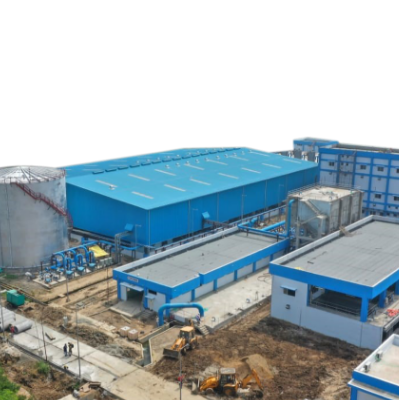
-
Afikey Maim Reclamation Plant (Israel)
Desalination, Reverse Osmosis
Read more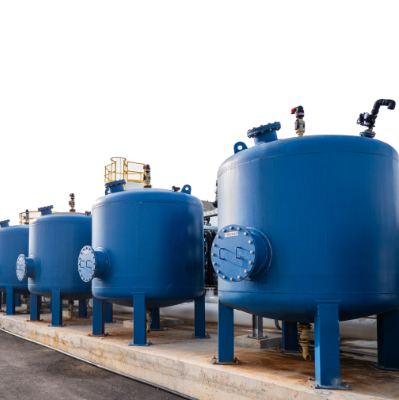
-
The Prospect Lake Clean Water Center (USA)
Fort Lauderdale’s Innovative Water Treatment Plant
Read more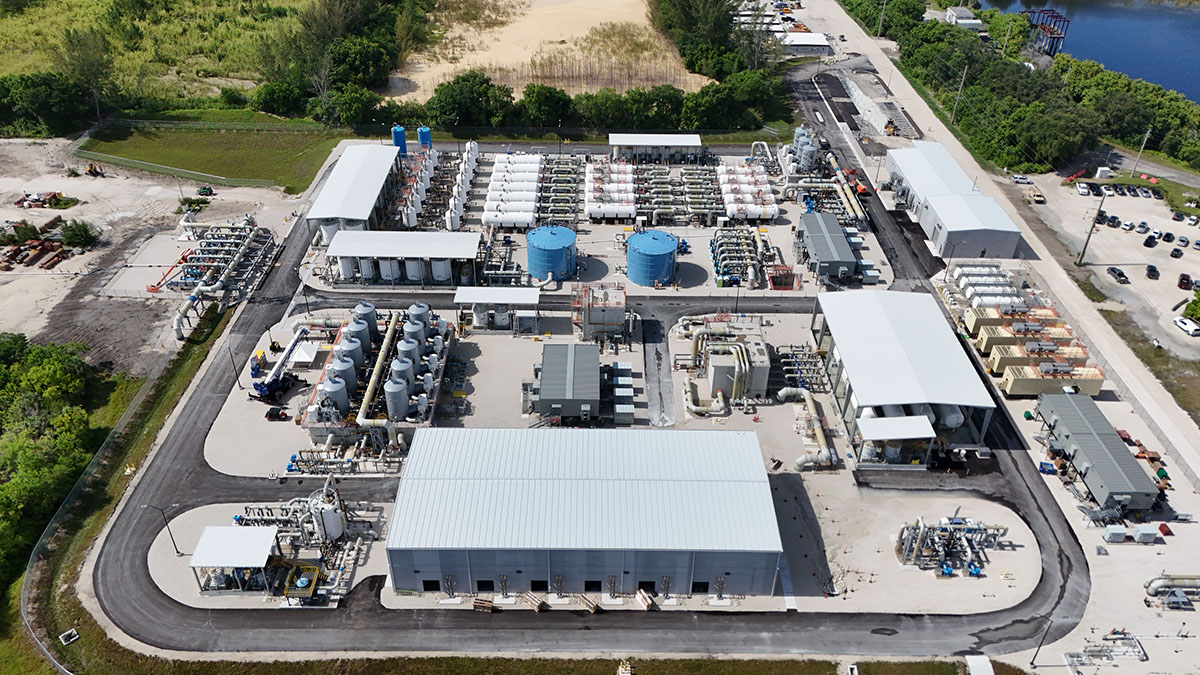
From Drain to Drink: Discover IDE's Water Treatment Technologies for Municipalities
-
Tertiary Treatment
Tertiary water treatment is the final stage of the multi-stage wastewater cleaning process. This third stage of treatment removes inorganic compounds, bacteria, viruses, and parasites. Removing these harmful substances makes the treated water safe to reuse, recycle, or release into the environment.
-
Microfiltration (MF)
Microfiltration is a filtration process using a microporous media that retains the suspended solids of a fluid. The pore size of the membrane ranges from 0.1 to 1 microns. Microfiltration is different from reverse osmosis and nanofiltration in that it does not require pressure. It is often used as a pretreatment step in the production of drinking water and industrial water. It has excellent properties to eliminate suspended solids, bacteria and cysts.
-
Fully Advanced Treatment (FAT)
FAT is the conventional solution for industrial and wastewater reuse facilities.
The treatment includes three stages, UF/MF, Standard multi-stage RO, and UV/AOP, which produces water that meets the strictest regulations for water reuse. It includes dosage of chloramine, which helps control biofouling of the membranes but is also a precursor to the formation of disinfection byproducts such as NDMA – a dangerous organic contaminant and a suspected carcinogen.
-
Ultrafiltration (UF)
Ultrafiltration (UF) is a pressure-driven barrier to suspended solids, bacteria, viruses, endotoxins and other pathogens to produce water with very high purity and low silt density. Ultrafiltration (UF) is a variety of membrane filtration in which hydrostatic pressure forces a liquid against a semi permeable membrane. Suspended solids and solutes of high molecular weight are retained, while water and low molecular weight solutes pass through the membrane.
-
PFRO: Chloramine-Free Water Reuse Solution
IDE’s Pulse Flow Reverse Osmosis (PFRO™) technology is completely chloramine-free. Contrary to standard RO systems that operate under continuous hydraulic and osmotic conditions, the PFRO™ process utilizes alternating hydraulic conditions, switching between dead-end production mode and flushing mode, during which brine is flushed out at high velocity.
The constantly changing hydraulic conditions make it very hard for microorganisms to sustain themselves, thereby reducing the risk of biofouling and scaling. This allows the system to operate at very high flux rates (50% higher than normal), eliminating the risk of rapid increase in biofouling and resulting in overall CAPEX savings of about 20%.
IDE’s proven and innovative PFRO™ solution for water reuse, can help municipalities power water resiliency, security and sustainability.

FAQ
Municipalities should use reverse osmosis (RO) when conventional treatment cannot reliably remove dissolved contaminants such as salinity, nitrates, PFAS, or trace organics. RO is also required for potable reuse applications (IPR/DPR) where extremely high water quality is mandated.
From a decision standpoint, RO becomes necessary when:
source water quality is deteriorating or highly variable,
regulations tighten beyond what filtration and disinfection can achieve,
reuse is required to secure long-term water supply.
While RO adds capital and operational complexity, it provides a predictable, regulation-proof barrier that conventional treatment cannot.
Potable reuse systems are designed using a multi-barrier approach that provides redundancy and regulatory confidence. This typically includes MF/UF pretreatment, reverse osmosis, UV disinfection, and advanced oxidation.
Design decisions focus on:
contaminant log-removal requirements
system redundancy and online monitoring
operational reliability under continuous load
public health risk management
For DPR, additional safeguards such as real-time monitoring, automatic shutdown, and operational controls are critical to meet regulator and public acceptance standards.
Safe conversion from wastewater to drinking water requires multiple independent barriers that address pathogens, chemicals, and trace contaminants. These typically include membrane filtration (MF/UF), RO for dissolved contaminants, and UV/AOP for organic destruction and pathogen inactivation.
The intent is not reliance on a single process, but layered protection that ensures failure of one barrier does not compromise water safety.
Advanced systems reduce risk by stabilizing output water quality regardless of source variability. This lowers compliance risk, minimizes emergency interventions, and protects downstream infrastructure.
Over time, predictable water quality translates into:
fewer regulatory violations
lower operational stress
easier system expansion
improved public trust
This is especially critical for reuse and drought-resilient supply strategies.
Lifecycle costs are driven less by CAPEX and more by energy, chemicals, membrane life, labor, and compliance risk. While advanced systems cost more upfront, they often deliver lower total cost of ownership by avoiding emergency upgrades, regulatory penalties, and water shortages.
Municipal buyers increasingly evaluate systems over 20–30 years rather than upfront cost alone.
Upgrades are typically phased and modular, allowing new treatment trains to operate alongside existing systems. This avoids shutdowns while enabling gradual transition to advanced technologies.
Delivery models such as BOT, BOO, or DB also shift construction and performance risk away from the municipality while maintaining service continuity.
PPP and BOT models transfer design, construction, financing, and operational risk to the private partner. The municipality pays for performance rather than construction milestones, reducing long-term financial exposure.
This is particularly effective for advanced treatment and reuse projects where operational complexity is high.
Adaptation is achieved through flexible pretreatment, real-time monitoring, automated dosing, and membrane-based processes that respond to changes in turbidity, organics, or salinity.
Systems designed for variability outperform fixed-chemistry plants in droughts, floods, and seasonal shifts.
High-reliability systems include redundant treatment trains, continuous online sensors, automated alarms, and fail-safe shutdown mechanisms.
Redundancy is not over-engineering, but rather a regulatory and operational requirement for critical public infrastructure.
Future-proofing means designing plants that can accept additional treatment stages without major reconstruction. Membrane-based systems and modular layouts allow new regulations (e.g., PFAS limits) to be addressed with minimal disruption.